Use one protocol instead of a list of opinions
A youtube video downloader comparison is useful only when every tool receives the same permitted source, browser, time window, and scoring rules. Our control protocol uses Blender’s official “Big Buck Bunny 60fps 4K - Official Blender Foundation Short Film,” which the YouTube player reported at 10:34. The source is recognizable, long enough to expose meaningful size differences, and documented by an official Blender project page. Keep the same network class and disable unrelated transfers so timing evidence is not distorted by another download.
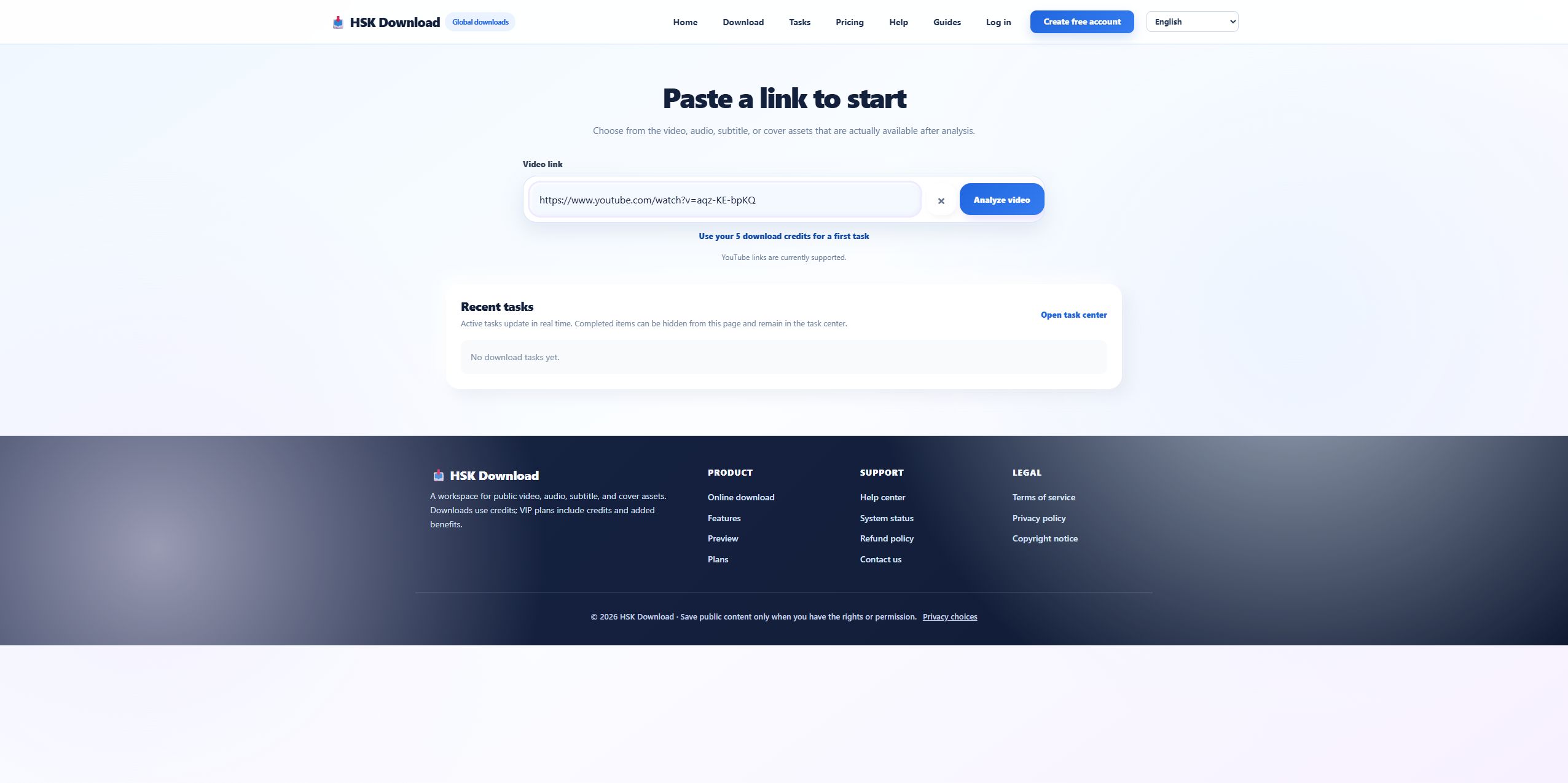
Minute one: record the source baseline
Write down canonical URL, title, channel, visible duration, highest source quality, license or permission evidence, and test time. If any item changes between tools, pause the comparison. A redirect, playlist parameter, regional restriction, or edited upload can invalidate the assumption that each product analyzed the same object.
Minutes two and three: score identity and option discovery
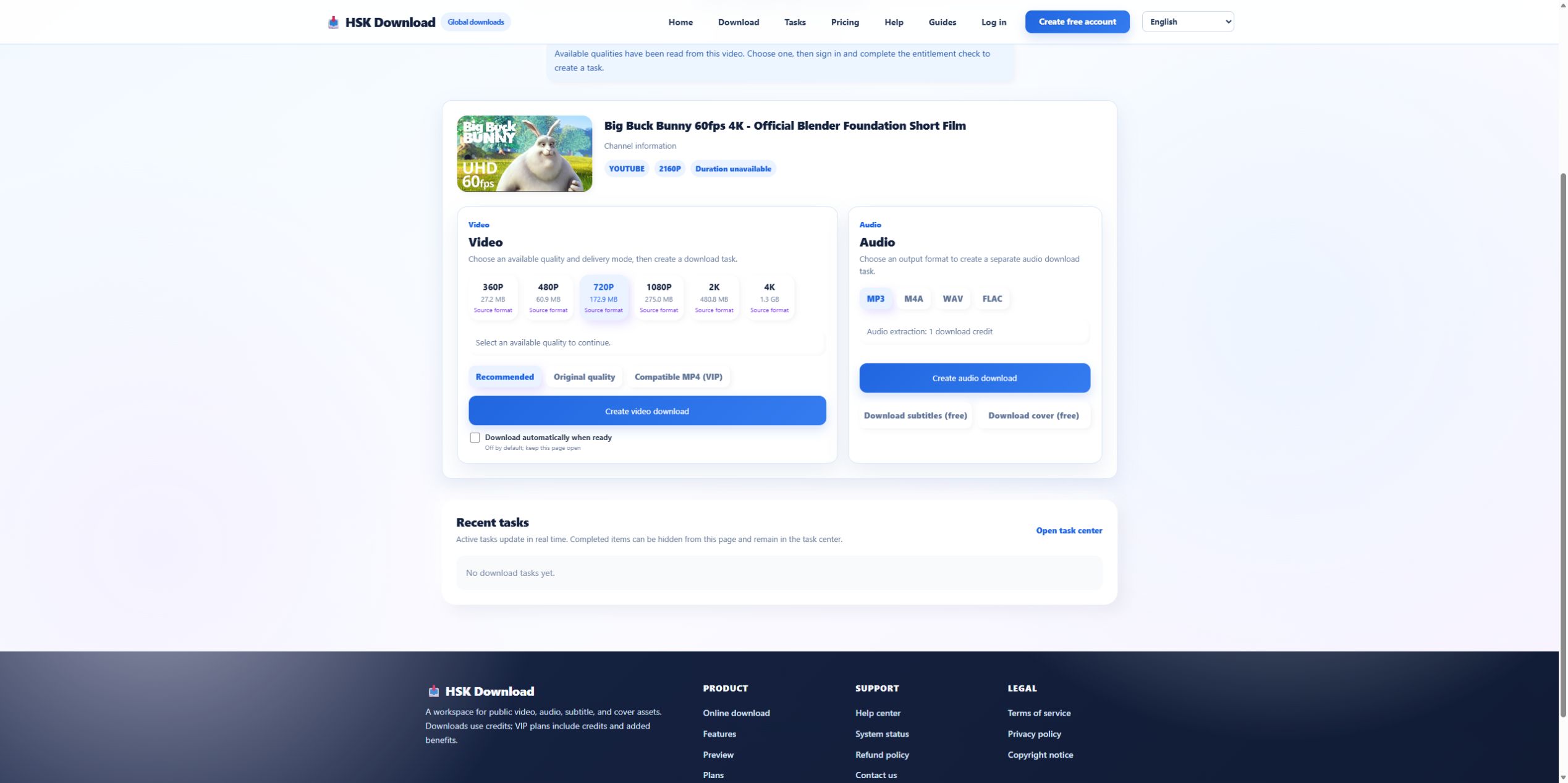
After analysis, award one point for a matching title and one for a matching thumbnail. Then record the exact video and audio options. HSK returned six video qualities from 360P to 4K and four audio formats for the control. Do not award points for formats printed before source analysis; the benchmark is about returned evidence.
Minutes four and five: compare storage disclosure
Record whether the tool shows a source-based size or leaves the user guessing. For HSK, visible estimates included 172.9 MB at 720P, 275.0 MB at 1080P, 480.8 MB at 2K, and 1.3 GB at 4K. A size estimate earns credit when it is clearly labeled and tied to a specific option. It is not scored as an exact final measurement until a file exists.
Minutes six and seven: inspect the delivery choice
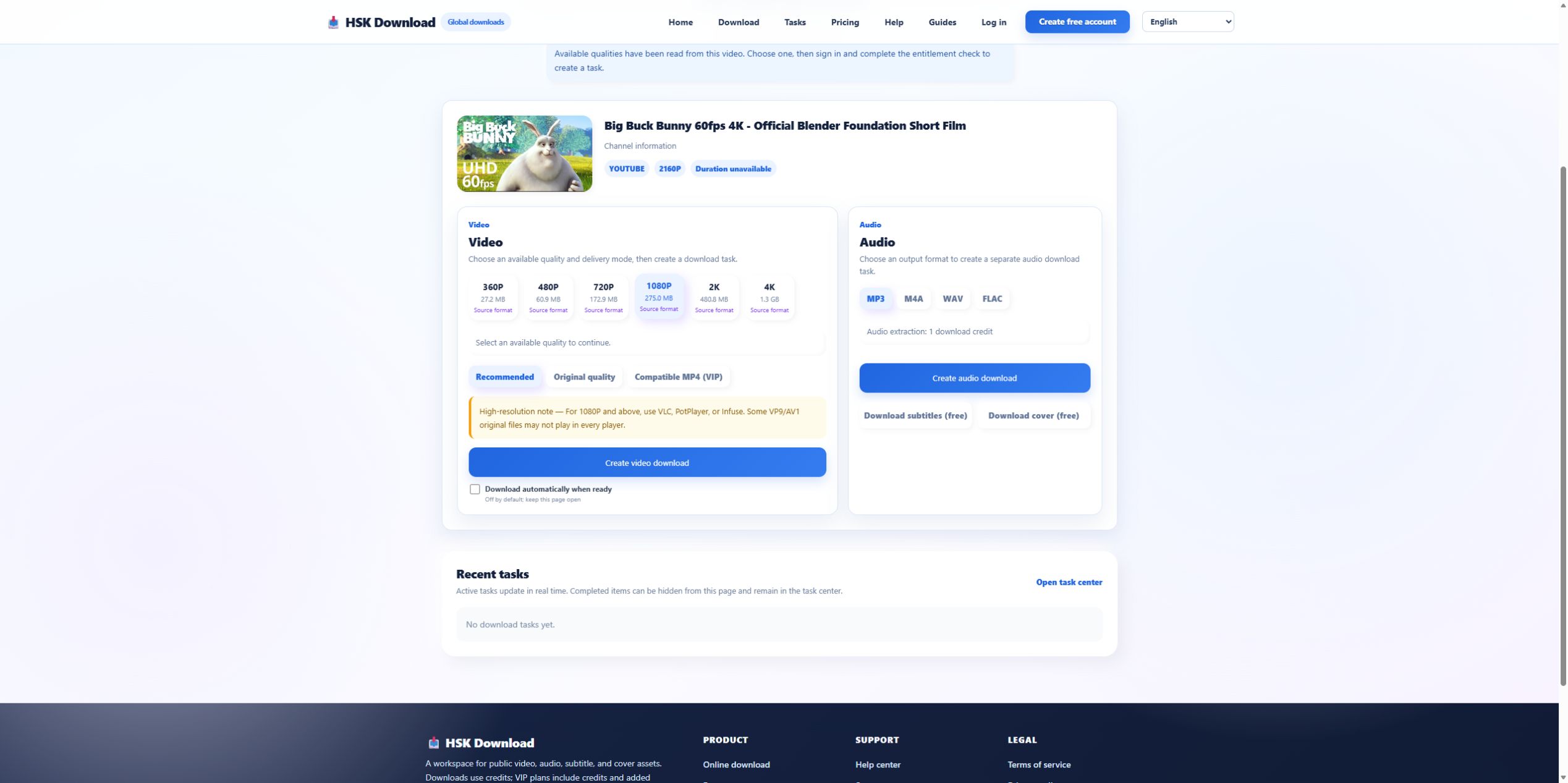
Document whether the tool distinguishes source fidelity from broad compatibility. HSK exposed Recommended, Original quality, and Compatible MP4 (VIP). Select one known option—1080P is a practical control—and capture the state. If another service forces an extension without explaining its compatibility path, note that difference rather than assuming the same implementation.
Minute eight: document the account boundary
Record the last action available before login, payment, credit, or entitlement. A clear boundary earns more trust than a surprise redirect. Do not enter payment information just to finish a benchmark. This HSK evidence run stopped before account-gated task creation and therefore scores analysis transparency, not conversion speed or delivered-file quality.
Minute nine: check privacy, support, and task traceability
Confirm that the service publishes privacy, copyright, contact, status, and help routes. If you create an authorized task in a later test, require an observable status and identifier. Remove points for unnecessary permission requests, foreign redirects, automatic extension prompts, or lack of a support path. Never benchmark with private customer material.
Minute ten: publish the limits with the score
A fair result says what was and was not tested. This run proved source recognition, option discovery, size disclosure, delivery-mode labels, and the sign-in boundary. It did not measure final encoding time or output integrity. Report those untested dimensions as “not measured,” not zero or failed. Reproduce the protocol through the English download page, keep screenshots, and date every claim so a later product or source change can be identified. A benchmark should be rerun after a visible product change rather than silently carrying old scores forward.
Evidence ledger for “YouTube Video Downloader Benchmark: A Repeatable Test You Can Run in 10 Minutes”
Evidence date: 2026-07-29. Control source: Big Buck Bunny 60fps 4K - Official Blender Foundation Short Film from the official Blender channel (10:34 in the YouTube player). The live analysis exposed 6 video resolutions, 4 audio formats, subtitles and cover, then required sign-in and an entitlement check before task creation. This ledger states exactly which observations support undefined and prevents the article from implying that a completed file was produced when the run stopped at the documented account boundary.