A reproducible failure is more valuable than ten retries
When a youtube video downloader fails, preserve the first clean incident. Record the exact time, URL type, source title, browser, device, page state, selected quality, and visible message. Repeated clicks can create duplicate tasks, consume credits, or overwrite the evidence that showed where the workflow stopped. This guide uses a 2026-07-29 Blender control run to define a stable comparison.
Establish whether the product path still works
Use a source you own or one with documented permission. The control URL returned the correct Blender title, thumbnail, and 2160p label. If the control fails at the same stage as the target, the problem may affect the service, network, or browser. If the control works, focus on the target’s availability, restrictions, age, region, or asset inventory.

Write a five-event timeline
Capture these events: page opened, URL submitted, source card returned, option selected, and task action attempted. Add the visible outcome after each. A timeline such as “14:10 source matched; 14:11 1080P selected; 14:11 login requested” identifies an account boundary. “Spinner ended; no source card” identifies an earlier analysis issue. Avoid interpretations until the observable sequence is complete.
Attach the option evidence
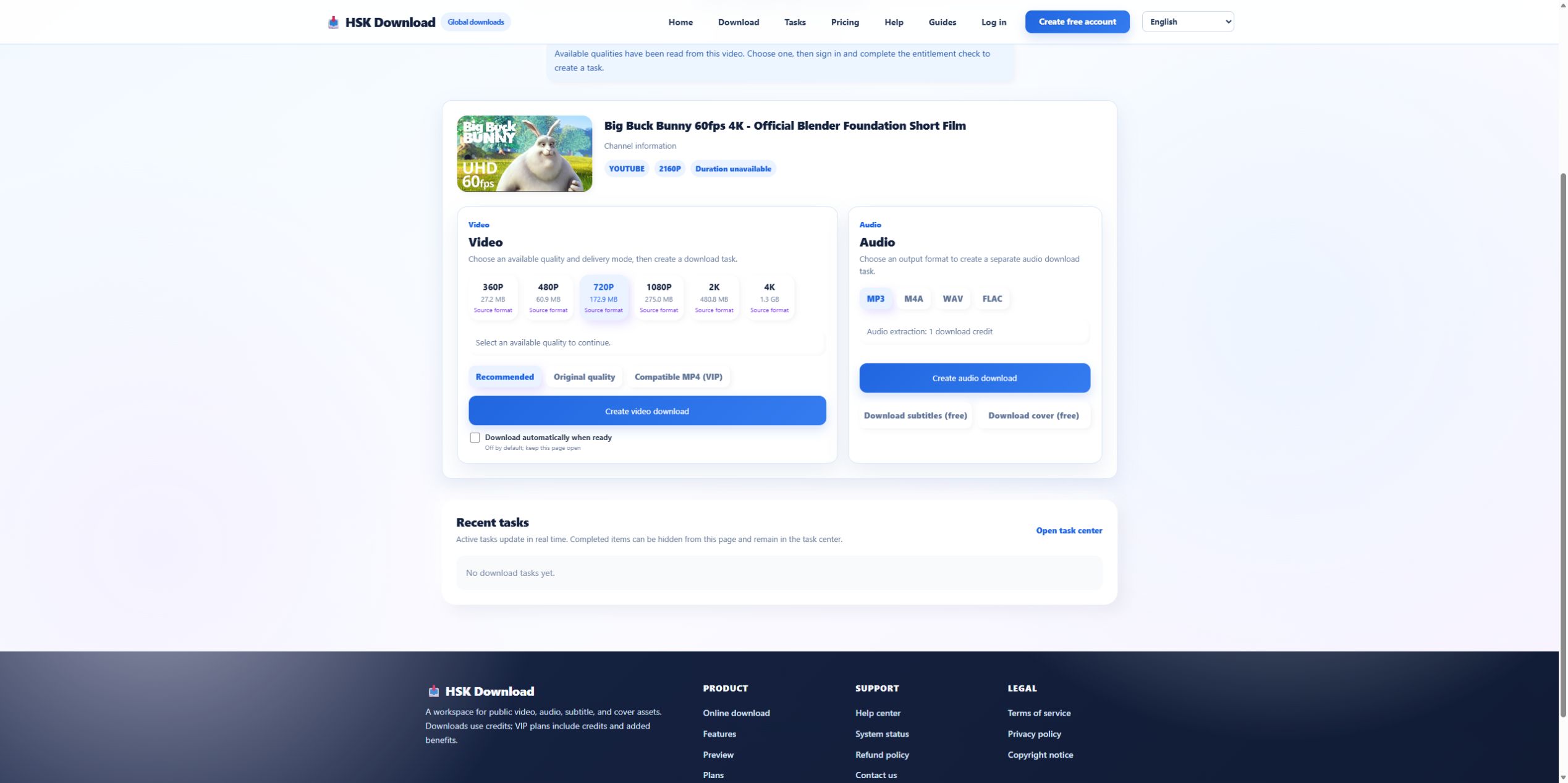
List the exact qualities and formats returned. The control exposed six video choices and four audio choices, plus subtitle and cover actions. If the target lacks one category, that fact is more actionable than saying the downloader is broken. Include a screenshot of the result panel, but crop or remove account information, task history, and unrelated browser content.
Record the selected mode and expected storage
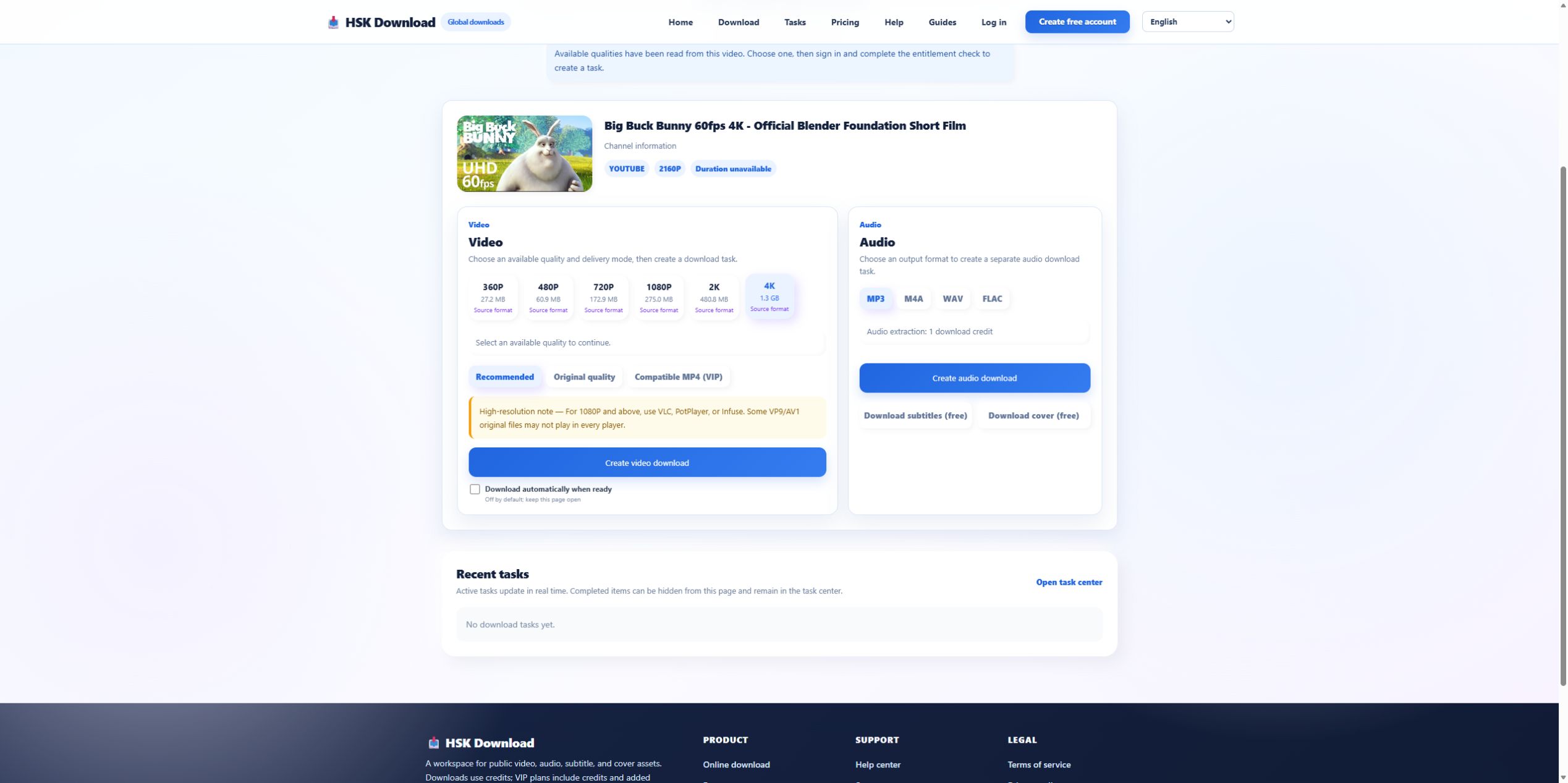
A report should say “1080P, Original quality, estimate 275.0 MB,” not simply “HD.” For a high-size case, say “4K, estimate 1.3 GB” and include available disk space. Delivery mode can explain compatibility, while free space can explain a browser failure. Do not hide a size mismatch by starting a second task at a different resolution.
Identify the last system that confirmed success
If the source card appeared, URL parsing worked. If options appeared, asset discovery worked. If a task identifier exists, account checks and task acceptance worked. If the task completed, investigate browser delivery or playback. This last-success rule prevents a support report from blaming the wrong component and shortens the path to a useful answer.
Remove sensitive information before sharing
Never attach cookies, authorization headers, passwords, payment details, private URLs, email addresses, full task histories, or browser-profile data. A useful screenshot contains the source title, relevant option, task stage, and error message. Replace personal identifiers with neutral labels. If the source itself is confidential, reproduce with an authorized public control instead of disclosing it.
Submit the smallest complete packet
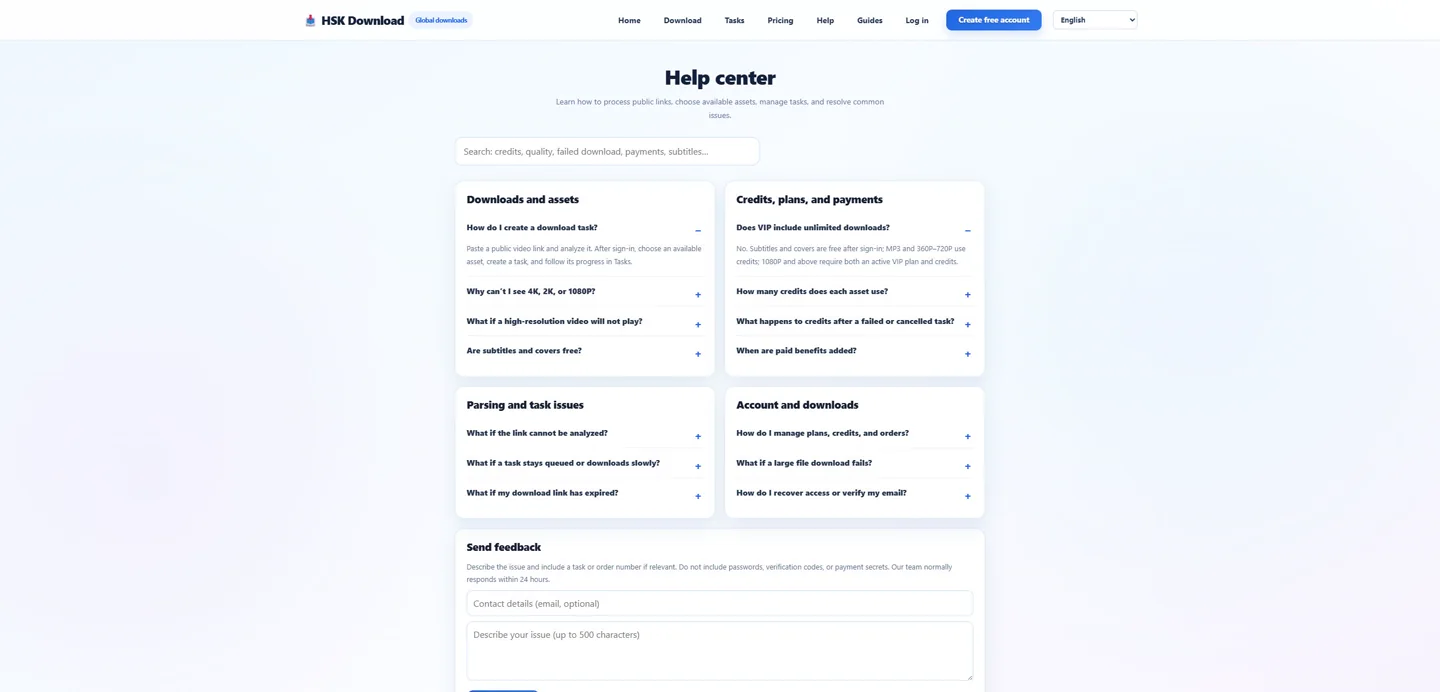
Send the timeline, control result, target result, browser/device, selected mode, storage check, and exact message. Include whether the issue reproduces in a second current browser only if you actually tested it. Recreate the permitted case once on the English download page, then use the help centre. A short evidence packet is easier to act on than a long narrative with no timestamps, and it can be compared directly with a later retest.
Evidence ledger for “YouTube Video Downloader Failed: Build a Reproducible Report Instead of Retrying”
Evidence date: 2026-07-29. Control source: Big Buck Bunny 60fps 4K - Official Blender Foundation Short Film from the official Blender channel (10:34 in the YouTube player). The live analysis exposed 6 video resolutions, 4 audio formats, subtitles and cover, then required sign-in and an entitlement check before task creation. This ledger states exactly which observations support undefined and prevents the article from implying that a completed file was produced when the run stopped at the documented account boundary.